general

Venezuela’s Hyper-Adoption: How 10% of the Population Now Uses Crypto for Survival

The post Venezuela’s Hyper-Adoption: How 10% of the Populaticom. Venezuela’s crypto adoption doubles annually, ranking second in Latin America with $100M monthly P2P volume. Stablecoins like USDT provide an inflation shield for 10% of Venezuelans in daily transactions. The use of cryptocurrencies in Venezuela is doubling every year, a direct response to the persistent erosion of the local currency. The country currently holds second place in crypto adoption in Latin America, a position only surpassed by Brazil. The volume of peer-to-peer transactions in the nation already exceeds $100 million monthly. One in ten people in Venezuela uses these monetary assets as a payment method for everyday transactions. Engineer Aníbal Garrido, director of the Blockchain Trading and Crypto Assets Academy at the Universidad Católica Andrés Bello, provided these figures. Garrido emphasized that Venezuela possesses one of the most robust legal frameworks globally for the crypto asset market. He acknowledged that a higher level of regulatory development is required, but affirmed that the current legal structure is one of the most complete and confidence-building available. Venezuela Regulatory and Operational Mechanisms Only two companies have received authorization from the National Superintendence of Crypto Assets (Sunacrip) to process exchanges of these assets. These operate under the brands Crixto and Kontigo. Garrido anticipates the incorporation of more companies in the short term. The professor clarified that Sunacrip is not closed, but rather under intervention, and maintains operability behind closed doors. This continued operability allows for the issuance of licenses for exchange houses and their transaction applications. Adoption stems primarily from necessity within a complex economic environment. Garrido stated during a presentation at the Conindustria 2026 projections event that Venezuelans are adopting cryptocurrencies out of pure need, not as a trend. Data from the firm Chainalysis confirms that cryptocurrency use in Venezuela is growing at rates exceeding 100% year-over-year. Citizens use these assets for exchange.

general

Zcash Price Retains 4% Rally Amid Crypto Bloodbath

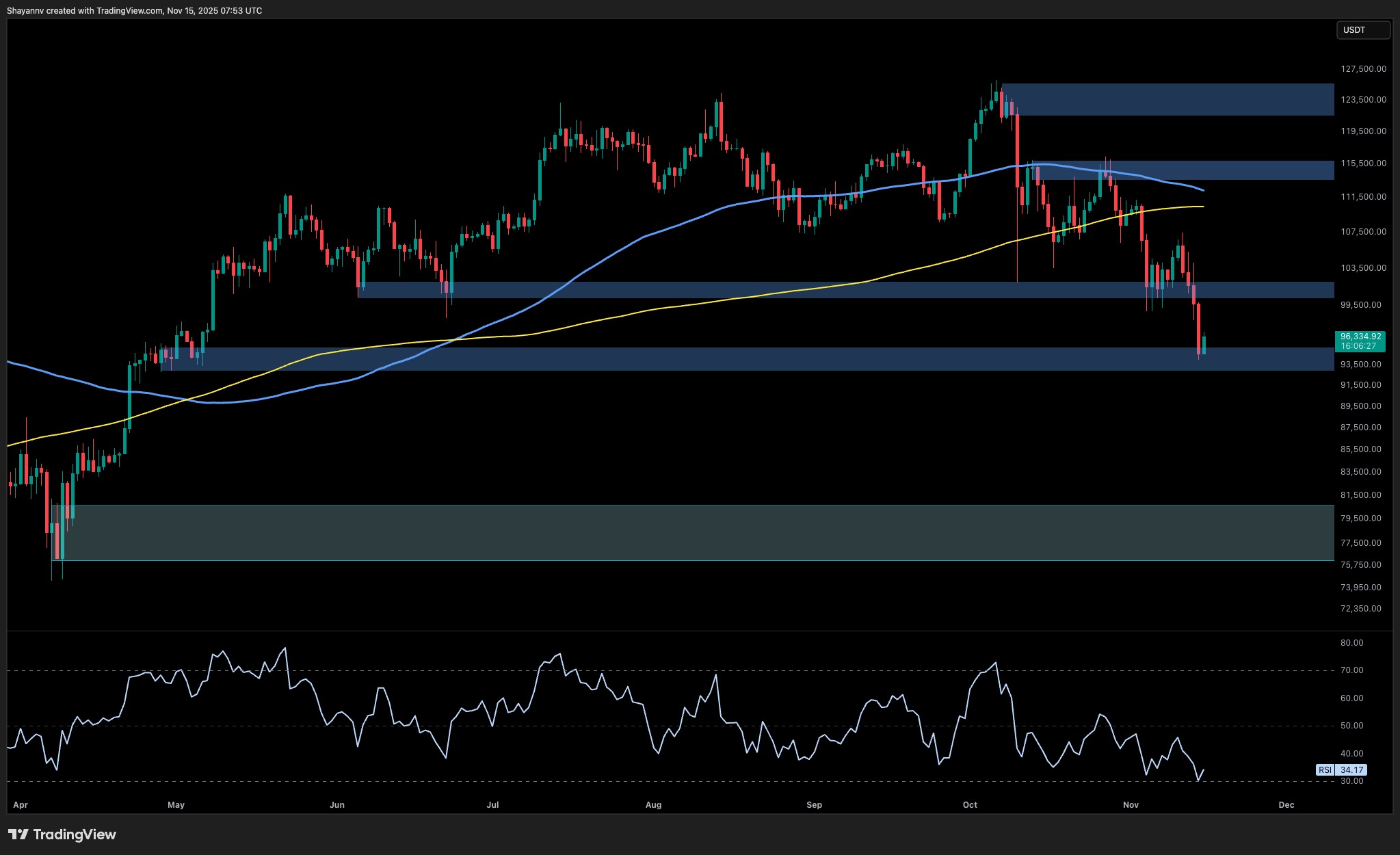
The post Zcash Price Retains 4% Rally Amid Crypto Bloodbath appeared com. Zcash (ZEC), a privacy-focused cryptocurrency, registered gains of more than 4% over the past 24 hours. This rally comes despite a broader market bloodbath, which saw top coins like Bitcoin (BTC) and Ethereum (ETH) dropping to new lows. Zcash stands as outlier amid market downtrend The broader crypto market is experiencing a severe downturn today, Nov. 14, 2025. The total crypto market cap erased roughly $300 billion, dropping to $3. 22 trillion. For the first time in months, Bitcoin has plunged below $100,000, hitting lows between $97,000 and $98,400. This price decline triggered over $1. 39 billion in liquidations across the sector over the past 24 hours. Ethereum and major altcoins have shed around 5-20% of their value. Currently, ETH is traded at $3, 106, down 10. 5% on the daily chart. Amid this crypto market brutal bloodbath, Zcash stands out as a rare outlier, rallying over 4% to $564. 90. ZEC defied the market’s 4-6% average drop and is now trading as the 14th-biggest crypto, with a market capitalization of $9. 2 billion. The ZEC year-to-date gains now exceed 1, 360%, making it the top performer in privacy coins. Zcash began to rise in September from about $50, climbing consistently for weeks. The rise brought its market capitalization to above $10 billion. You Might Also Like What’s happening with Zcash? Crucially, the latest ZEC surge is not random speculation. Rather, it comes amid increased privacy demand, supply mechanics and institutional conviction that positions it as a “safe haven.” Zcash, unlike BTC and ETH, uses zero-knowledge proofs (zk-SNARKs) to enable fully shielded transactions, hiding sender, receiver and amounts. This technology powers much of modern zk-rollups, giving ZEC an asymmetric upside. ZEC shattered a two-month downtrend in October, surging 350% to hit new price highs over $268. It is now testing the $560 resistance, with RSI cooling from overbought to.


general

BLS to Release Jobs Report on Nov. 20 as Uncertainty Over Fed Rate Cut Persists

The post BLS to Release Jobs Report on Nov. 20 as Uncertainty Over Fed Rate Cut Persists appeared com. The Bureau of Labor Statistics (BLS) has provided an update on when it will release the September jobs report following the U. S. government reopening. This comes as the December Fed rate cut decision remains uncertain, with some Fed officials indicating that a softening labor market may no longer be enough to warrant a cut. Amid this uncertainty, crypto traders are currently paring their bets on another cut in December. BLS To Release Jobs Report Next Week Amid Fed Rate Cut Uncertainty In a release, the BLS announced November 20 as the revised release date for the September jobs report, with the data dropping at 8: 30 am ET. The jobs report will be the first macro data that the BLS will release following the reopening of the U. S. government. The agency failed to provide an update on when it will release the October jobs report. There is also no update on when the BLS will release the October CPI and PPI reports. Notably, the agency released the September CPI report during the government shutdown, the only macro data it released during that period, just before the October Fed rate cut decision. The jobs data and other macro data that the BLS may release soon will influence the Fed’s decision at the December FOMC meeting. These macro data are also expected to give market participants insights into what the rate-cut decision might be at that meeting, amid uncertainty over whether the committee will lower rates. The committee has already made two Fed rate cuts this year, mainly due to concerns about a softening labor market. However, some Fed officials have suggested that the softening labor market may no longer be sufficient to justify lowering interest rates, especially with inflation well above their 2% target. Fed President Jeff Schmid stated that further cuts will have long-lasting.