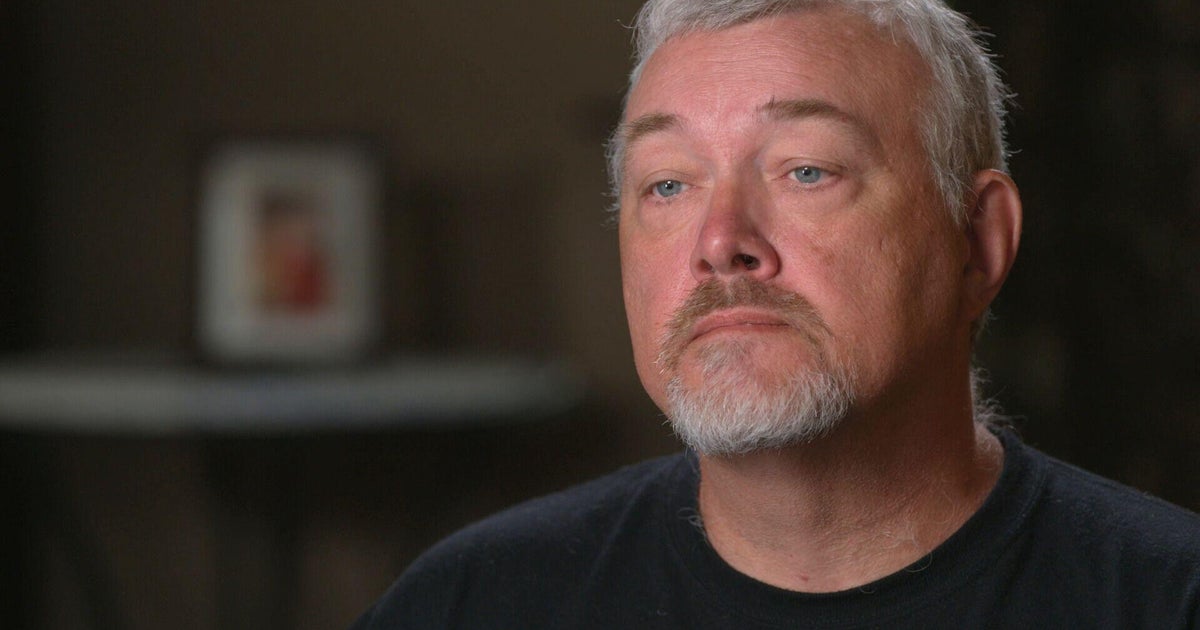
For the past two weeks, prosecutors in Barrow County, Georgia, have argued that Colin Gray ignored warning signs about his son’s mental health before the teen allegedly opened fire at Apalachee High School in 2024, killing two teachers and two students.
The Apalachee case marks the third time a parent has been charged in connection to a mass shooting allegedly carried out by their child. Following the 2021 shooting at Oxford High School in Michigan, prosecutors convicted the gunman’s parents, James and Jennifer Crumbley. They were each sentenced to 10-15 years in prison. This was the first time parents were held criminally responsible for their child’s mass school shooting.
According to the Gun Violence Archive, there have been more than 80 mass school shootings at U.S. schools since the 1999 Columbine massacre.
### Calls for Accountability
Steve St. Juliana, who lost his 14-year-old daughter, Hana, in the Oxford shooting, said something needs to change.
“Our society refuses to take significant action to protect our children. So, one of the only places that we can put this back onto are the parents,” he said.
He is not alone. Buck Myre, whose son Tate was killed in the Oxford shooting, expressed frustration that the nation hasn’t learned the necessary lessons about prevention that could have stopped the shooter from killing four students at Oxford High.
—
### What Happened in Oxford, Michigan
On November 30, 2021, 15-year-old Ethan Crumbley walked the halls of Oxford High School armed with a 9-millimeter handgun, killing schoolmates Madisyn Baldwin, Tate Myre, Justin Shilling, and Hana St. Juliana. It was the deadliest school shooting in Michigan’s history.
Three days after the shooting, in an unprecedented move, prosecutors in Oakland County filed involuntary manslaughter charges against the shooter’s parents, arguing there were several red flags about their son’s behavior in the months leading up to the attack.
Court documents revealed troubling details:
– In the weeks before the shooting, Ethan texted his mother that he saw demons in the family home.
– Three months earlier, he texted a friend saying “it’s time to shoot up the school,” later assuring the friend he was kidding.
– A day before the shooting, a teacher emailed administrators noting that Ethan had been looking at “different bullets” online during class.
– A school employee left a voicemail for his mother, who did not respond. Instead, she texted her son, “Lol I’m not mad, you have to learn not to get caught.”
– Hours before the shooting, a teacher alerted administrators after discovering drawings of a gun, a bullet, and a bleeding person on Ethan’s math worksheet, along with messages like “the thoughts won’t stop, help me” and “blood everywhere.”
Ethan was taken to a guidance counselor’s office, and his parents were called in for a meeting that lasted just 12 minutes. The counselor recommended therapy and suggested taking Ethan home, but the parents refused, citing work commitments. After they left, Ethan returned to class without his backpack being checked.
Two hours later, surveillance footage showed the teenager retrieve a gun from his backpack in the bathroom, then enter the hallway and begin shooting.
Investigators also found Ethan’s journal in the bathroom, which detailed his desire and plan to shoot up his classmates.
Adding to the concerns, three days before the attack, Ethan’s mother took him to a shooting range to practice with the 9-millimeter handgun that his father had purchased as an early Christmas present.
—
### Similarities to the Apalachee Case
The 14-year-old alleged gunman in the Apalachee High mass shooting displayed similar red flags months before the tragedy.
Investigators found that he kept step-by-step plans in a notebook, including diagrams and potential body counts. He reportedly had a poster of the Parkland shooter hanging in his bedroom.
Like Ethan Crumbley, the Apalachee teen allegedly brought a gun to school in his backpack and began shooting after leaving a bathroom. The firearm was also purchased by his father, Colin Gray, as a Christmas gift.
The teen was indicted on 55 counts, including murder in the deaths of four people and 25 counts of aggravated assault. Colin Gray faces 29 charges, including second-degree murder and manslaughter.
While both parents in the Oxford case were held accountable, only the father in the Apalachee case has been charged. The district attorney prosecuting Gray alleges he allowed his son access to a firearm and ammunition despite warnings that the child might harm others. Both Colin Gray and his son have pleaded not guilty.
—
### Accountability After School Shootings
In the Oxford case, the shooter pleaded guilty to all charges and was sentenced to life in prison. His parents were each convicted of four counts of involuntary manslaughter for failing to safely secure the gun and ignoring their son’s need for mental health help. They received sentences of at least 10 years.
“There were plenty of red flags for them to be aware that he was in crisis,” St. Juliana said of the Crumbleys. “Their answer was to go buy him a gun and take him shooting, which in itself isn’t wrong, but when that’s your response to a child in crisis, that’s a problem.”
Both St. Juliana and Myre want accountability to extend beyond teen shooters and their parents to include schools and educators.
“We can’t let them off the hook. This was preventable,” Myre said.
Lawsuits filed by victims’ families against the Oxford School system were dismissed due to Michigan’s government immunity laws, which protect public entities and their employees from being sued.
—
### Investigating Mass Shootings
For years, Myre and St. Juliana have called for a state-led investigation into the Oxford High School shooting.
Currently, there are no national standards or federal mandates requiring state reviews or investigations after school shootings. The FBI typically only investigates if shootings are classified as acts of terror or hate crimes.
In May 2022, after community pressure, the Oxford School Board hired Guidepost Solutions, a private security firm, to conduct an independent investigation. However, Guidepost cannot compel testimony, and of the 161 people they sought to interview, approximately 70 refused or did not respond, including two school employees who interacted with the shooter just hours before the incident.
While many staff members gave depositions in court, Guidepost reported that these did not fully address their questions.
Guidepost’s investigation found that Oxford High teachers acted appropriately by raising concerns immediately but faulted the school for not following established threat assessment protocols, concluding “this tragedy was avoidable.”
The Michigan Attorney General’s office is now conducting its own investigation.
—
### What Research Shows on Preventing School Shootings
James Densley and Jillian Peterson, professors of criminology and founders of the Violence Prevention Project nonprofit in St. Paul, Minnesota, have spent the past decade researching hundreds of mass shootings.
They have interviewed both shooters and those who knew them to better understand pathways to violence and how to stop it.
“You think about all the things learned after 9/11 — an entire infrastructure was created to deal with terrorism,” Densley said. “We don’t see the same urgency with mass shootings. Instead, we get ‘thoughts and prayers’ and endless debates, but no substantial action.”
Peterson explained their research uncovered consistent patterns among shooters: many experienced significant violence, neglect, or domestic violence during childhood.
When asked if anyone could have stopped them, over 90% of school mass shooters said yes. “One even said, ‘I think anyone could have stopped me,’” Peterson said.
Their research shows that most shooters broadcast their plans online or in person before the attack. This was seen in the shootings at Parkland, Florida; Uvalde, Texas; Apalachee High School in Georgia; and Newtown, Connecticut.
—
### What Schools Can Do to Prevent Mass Shootings
Many school districts have responded to rising school shootings by installing metal detectors or requiring clear backpacks. However, Peterson said these are not the best use of resources.
“Resources are better spent on teams that communicate with each other, school-based mental health, crisis intervention, and suicide prevention,” she said.
“The best way to prevent violence is not to push kids out, but to pull them in.”
Densley and Peterson are currently testing this approach in St. Paul through a pilot program that trains school staff to identify kids in crisis and connect them with support services.
In 2022, after the Uvalde shooting, Congress passed a bipartisan bill allocating over a billion dollars to expand school-based mental health services and staff. However, in April 2023, the U.S. Department of Education discontinued most of those grants, citing conflicts with the administration’s priorities. In December 2023, the department awarded $208 million for credentialed school mental health providers — a fraction of the original funding.
—
### A Call for Change
St. Juliana, still grieving his daughter’s loss, emphasized the need for urgent action.
“Gun violence is the number one killer of our children in America,” he said.
“Our society seems to have its head in the sand, refusing to acknowledge this, just saying, ‘Oh, it’s the way it is.’ That’s a ridiculous answer.”
“This is not insurmountable. We can make great strides to prevent this from happening again. We just aren’t.”
https://www.cbsnews.com/news/school-shootings-accountability-oxford-michigan-60-minutes/