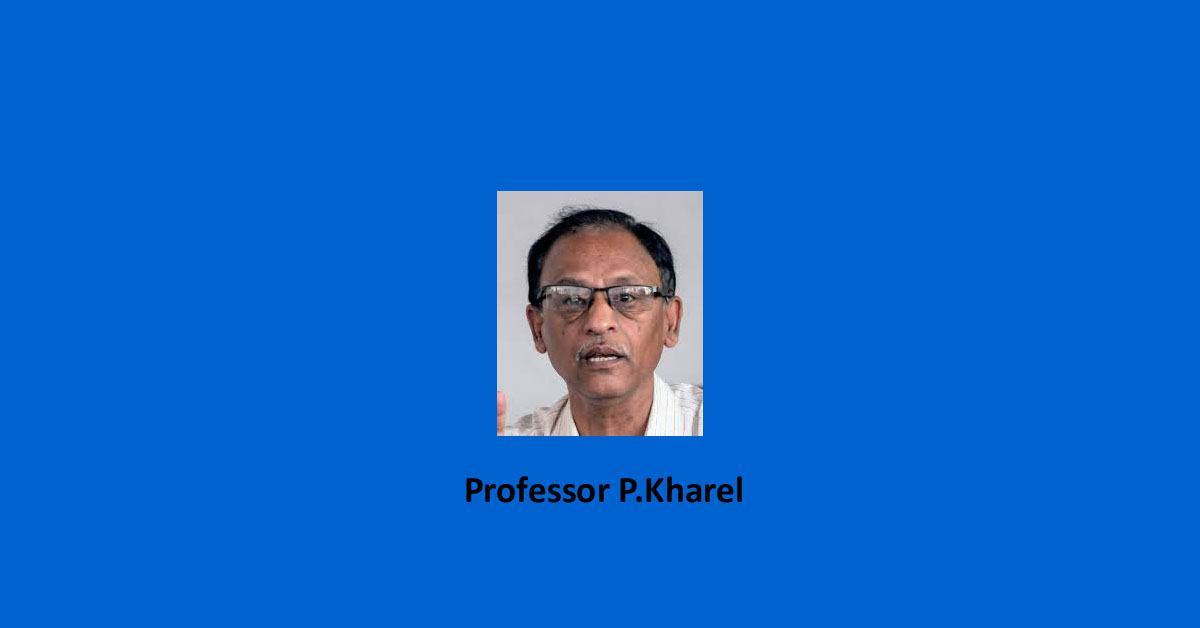
**By P Kharel**
An intriguing and deafening silence from the national political parties has gripped the Nepalese political landscape.
Two months ago, Jana Aastha weekly carried as its main story a revelation attributed to former Prime Minister Madhav Kumar Nepal. The Jana Aastha story has not been denied by Madhav Nepal, now of the newly formed Nepali Communist Party that includes former Maoist leader Pushpa Kamal Dahal and other fringe communist outfits. Nor have leaders of Nepali Congress or the CPN (UML)—including five-time former Prime Minister Sher Bahadur Deuba and three-time former Prime Minister KP Oli—commented on the sensational revelation.
Noted editor Yuvaraj Ghimire’s Deshsanchar online news outlet promptly lifted the Jana Aastha story verbatim, with due credit to the paper edited by former Press Council Nepal chairman Kishor Shrestha. This only added to the credence of public speculation.
—
### Growing Support
Even as Nepali Congress Chairman Sher Bahadur Deuba and his wife Arzoo were on their highly speculated trip to Singapore in autumn, one of Deuba’s trusted lieutenants, Gopal Man Shrestha, hastily called a press conference. He called for an all-faceted conference to discuss democracy with monarchy. No credible voice from either the Nepali Congress or any other organisation known for vociferously championing Nepal as a republic reacted.
Former NC parliamentarians Shankar Bhandari and Chandra Bhandari, along with leaders of NC splinter groups like Haribol Bhattarai and Bipin Koirala, have joined hands for course correction in a political climate of constant unrest and disarray across every sector, amidst rampant corruption and impunity.
Former NC Minister Laxman Ghimire and another long-time Congress member, Lokesh Dhakal, publicly uphold monarchy’s vitality for the stability of democratic order. For that matter, the subject has even entered the NC general council, Mahasamiti.
The pro-monarchist lobby is growing louder, especially after the Gen Z movement. It emphasizes the country’s first elected Prime Minister BP Koirala’s two-pillar policy, based on democracy and monarchy as essential elements—a stance Koirala maintained until his very end. During his last weeks, Krishna Prasad Bhattarai, Girija Prasad Koirala’s senior as party chairman and prime minister, made a written appeal for retaining monarchy for national interest.
CPN (UML) President KP Oli was known to have harbored a soft corner for monarchy until his first stint as prime minister. Towards the end of his second term, however, he dismissed monarchy’s return as delusional—a stance he maintained during his most recent year-long premiership before resigning at the height of the Gen Z event in September. Oli’s silence on the prospects for monarchy is, therefore, intriguing.
Bidya Devi Bhandari championed a role for monarchy even before she became a two-term president. At a seminar organized by a German agency, she saw space for monarchy.
NC’s former parliamentarian and multiple-time minister, Dilendra Badu, regretted that his party did not champion the restoration of the Hindu kingdom as the main plank of its 2022 election manifesto. He believes such a strategy would have fetched the party a two-thirds majority.
Former Foreign Minister Narayan Khadka, also of NC, wrote an article for the Kantipur daily in November 2024, assessing that youth would rebel against ongoing disarray. He had reportedly been privately telling colleagues that monarchy could be reestablished “within a year or so”.
One of the senior-most Congress members and multiple-time legislator-cum-minister, Arjun Narsingh KC, is said to have seriously advised Deuba two years ago to review the organisation’s stand on monarchy, citing the large congregations at pro-monarchy programmes—especially when the former king made an address. Confidants of Shekhar Koirala are also reported to serve as go-betweens for communicating with Nirmal Niwas.
—
### Foreign Gestures
China’s President Xi Jinping met with former King Gyanendra in Beijing after two earlier visits, both hosted by China, where meetings with central committee and politburo members of the Communist Party were arranged. Former Crown Princess Himani accompanied him on all three occasions. The trips triggered fresh speculation.
Japan’s Royal Household regularly contributes to the Himani Trust, and the Japanese embassy in Kathmandu accords the Trust chair a pride of place at its big events.
At a time when the British monarchy’s popularity is steadily declining, King Charles—who visited Nepal twice as Crown Prince—might be nostalgic about the Himalayan kingdom’s monarchy. Do birds of the same feather fly together? Charles should know the answer better by now.
Unexpectedly, in October 2024, Bhutan’s King Jigme Keshar Namgyal Wangchuck invited former King Gyanendra and his spouse Komal for a visit to Thimphu—a move unlikely to have happened without New Delhi’s nudge.
—
### Message
Upon his return home, the former king told his close associates that the retreat was refreshingly fruitful. One suspects his satisfaction was not solely because of the red-carpet welcome befitting any visiting head of state. The VVIPs from Nepal must have decoded its political message.
The Bhutanese King was born at a Maharajgunj house in Kathmandu, which was taken on rent by Bir Hospital specifically for looking after Bhutan’s then-pregnant Queen and her post-natal care—a closely guarded secret during King Birendra’s reign in Nepal. In 2004, the Crown Prince Jigme Keshar Namgyal Wangchuck ascended the throne after his father resigned.
At the 2010 Shanghai World Exhibition, the young King Jigme Keshar was elated at the sight of the Nepal Pavilion. Speaking in Nepali and addressing the pavilion’s director as “dai” (elder brother), he profusely appreciated Nepal’s pride in its art and culture, saying, “We should work like this and preserve our heritage.” His sense of proximity to Nepal was evident when he informed the baffled director, “I was born in Nepal, at Bir Hospital.”
—
The details of Nepal’s fast-evolving political landscape will only be fully revealed when major powers open their Nepal monarchy files for public perusal—perhaps 20 or 30 years from now. Meanwhile, as facts stand, something does seem to be cooking—ripe and fresh.
https://mypeoplesreview.com/2025/12/14/leaders-mull-monarchys-prospects/