Sequoia Capital partner Shaun Maguire reveals why this industry is one of the ‘most underrated’
Sequoia Capital partner Shaun Maguire reveals why this industry is one of the ‘most underrated’
Sequoia Capital partner Shaun Maguire reveals why this industry is one of the ‘most underrated’
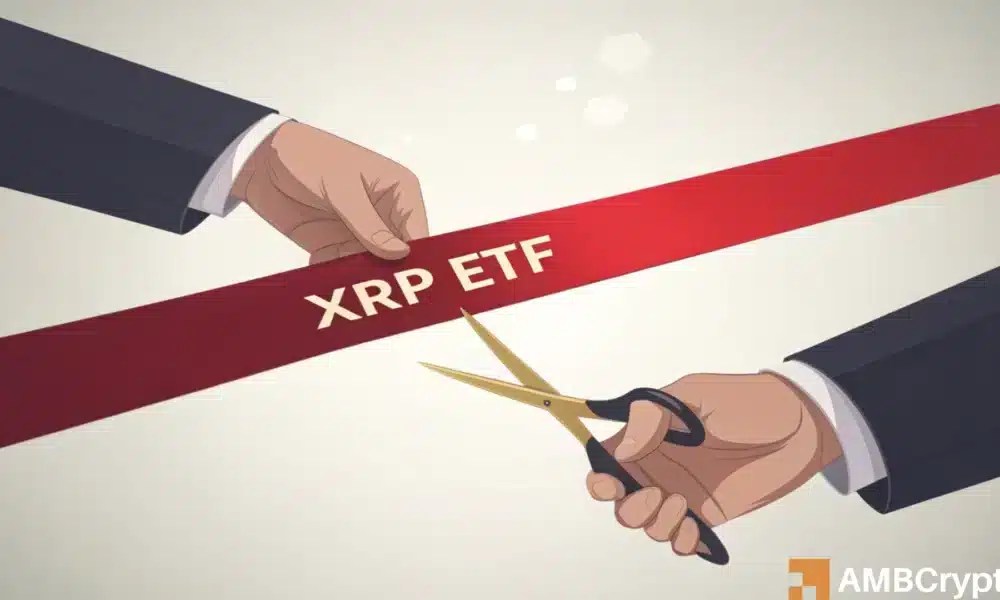
The post Bitwise launches XRP ETF despite a 25% Q4 slide Smart bet or mistimed risk? appeared com. Key Takeaways Why is Bitwise launching the XRP ETF strategic? It’s a long-term bet on XRPL’s infrastructure, not short-term XRP price moves, highlighting institutional confidence despite market pullbacks. Can Ripple replicate BTC-style ETF success? Unlikely in the short term, given the risk-off market, Ripple’s weak price action, and muted ETF-driven rallies so far. Bitwise has officially launched Ripple’s XRP Spot ETF. For context, the fund will charge a management fee of 0. 34%. However, the first month is free for the first $500 million in assets. This means early investors can join for free as long as total assets remain under $500 million. XRPL positioned as a long-term payments play Strategically, however, the story goes much deeper. In its official announcement, Bitwise highlighted how XRPL is integrating into the payments market, aiming to hit $250 trillion in value by 2027. “The Bitwise XRP ETF is set to begin trading on NYSE tomorrow with the ticker RP. Here’s why XRP is interesting: It’s going after a massive $250T cross-border payments opportunity.” In essence, this launch is a long-term bet on XRPL. Bitwise pointed out it’s the third-largest L1 blockchain, able to settle payments in 3-5 seconds for just a fraction of a cent, and has handled over 4 billion transactions with an average daily volume of $1. 9 billion. Notably, this marks Bitwise’s second big 2025 bet. The Solana [SOL] ETF has already attracted $223 million in just two weeks, reflecting the firm’s confidence in real-world blockchain use cases. The question now is, can Ripple [XRP] replicate the success of other ETFs? XRP diverges from other ETF performance This season hasn’t seen an ETF launch frenzy. SOL’s first ETF attracted nearly $500 million in inflows, yet its price hasn’t held. Solana is still the quarter’s weakest performer, down 30%+. XRP isn’t far behind,.
The approval marks a major reversal for the U. S., which had previously balked at the idea of direct exports to state-backed AI companies in the Gulf.
The post Starknet Breaks Out of 300-Day Accumulation as Institutional Bitcoin Staking Drives Rally Toward $2 appeared com. Starknet’s native token, STRK, rallied above $0. 27, ending a 300-day accumulation phase, and daily trading volume surpassed $1 billion. Anchorage Digital’s support for Bitcoin staking on Starknet has sparked new institutional interest, with more than $300 million in assets now securing the network. This breakout marks a turning point for the Layer-2 protocol, driven by increased staking demand and renewed interest in Zcash’s privacy innovations. However, pending token unlocks may test whether accumulation momentum withstands potential sell pressure. Sponsored Institutional Support Unlocks New Staking Era Anchorage Digital, a federally chartered digital asset bank, began supporting Bitcoin staking on Starknet in November 2025. Earlier in September, it became the first qualified custodian to offer institutional-grade custody and staking for STRK. This enables institutions to earn rewards and boost network security using regulated infrastructure. Starknet now reports more than $300 million in value, securing the consensus mechanism. As of November 2025, 920 million STRK and over 1, 260 Bitcoin are actively staked. This shift from retail to institutional participation could help stabilize price swings and increase decentralization. Anchorage’s Bitcoin staking builds on its November 2024 integration with the Babylon protocol, which pioneered institutional BTC staking. Expanding to Starknet reflects a growing desire for yield across blockchains. Meanwhile, the BTCFi initiative launched in September 2025, setting aside 100 million STRK in incentives for Bitcoin staking and DeFi, positioning Starknet for growth in Bitcoin-based finance. By combining regulated custody with trustless staking, Starknet addresses institutional fears about security and compliance. This infrastructure could bring capital from traditional finance players who have previously been hesitant about Layer-2 protocols. Price Breakout Fueled by Accumulation and Zcash Narrative According to BeInCrypto info, STRK traded at $0. 27617 as of 5: 00 am UTC, surging 22. 4% in 24 hours and 98% over the previous month. The token’s market cap reached $1. 26.
December WTI crude oil (CLZ25 ) today is down -1. 47 (-2. 42%), and December RBOB gasoline (RBZ25 ) is down -0. 0612 (-3. 06%). Crude oil and gasoline prices are sharply lower today, with gasoline falling to a 1. 5-week low. Today’s rally in the dollar index (DXY00 ) to a 1. 5-week high is.
TLDR: Aave App delivers up to 9% APY, significantly higher than typical bank savings accounts today. Deposits in Aave App receive up to $1 million in insurance protection for user security. Users can connect over 12, 000 banks and cards worldwide, including stablecoin deposit options. Auto Saver allows recurring deposits and adds an extra 0. 5% APY [.] The post Aave Savings App Offers Up to 9% APY for Mainstream Users appeared first on Blockonomi.
Arturo Bris, IMD professor in geopolitics and business, examines Europe’s often-overlooked innovation engine, unpacking why its long-term, patient approach isn’t just a hallmark of regional success, but a model from which global businesses can learn. Bris argues that Europe’s focus on technical depth, regulatory rigor and social relevance provides critical lessons for companies navigating complex, high-stakes markets worldwide.
The post Pendle Finance Sees Significant TVL Surge in Q3 2025 appeared com. Key Points: Pendle Finance reports $8. 75 billion TVL, 80% in stablecoins. Revenue and user numbers with substantial upticks. Demonstrates rapid TVL growth in the yield trading sector. Pendle Finance has reported substantial growth in Q3 2025, with average total locked value reaching $8. 75 billion, up from $3. 99 billion, driven largely by stablecoin utilization. The increase in total locked value establishes Pendle as a key player in decentralized finance, reflecting strong market demand for yield trading and stability in volatile crypto markets. Pendle Finance Sees Significant TVL Surge in Q3 2025 Pendle Finance released its third-quarter report, revealing a TVL of $8. 75 billion, a significant increase from $3. 99 billion in the second quarter. This growth rate has positioned the platform as one of the largest in the DeFi space. The report highlights stablecoins as the predominant asset class, constituting about 80% of the TVL. The increased liquidity reflects a strategic market shift towards yield strategies, signaling a move from passive holding. Pendle’s enhanced trading volume, reaching $23. 39 billion with fees of $9. 53 million, underscores the platform’s rising usage and sustained demand for its yield solutions. Crossing US$13 billion TVL is a testament to Pendle’s utility and the market’s need for flexible yield solutions. While the DeFi landscape evolves fast, our mission remains to provide transparent, secure, and innovative fixed‑yield infrastructure. DeFi’s Rising Star: Pendle’s Strategic Growth and Community Buzz Did you know? Pendle’s rapid ascent mirrors past growth seen in DeFi platforms like Aave, showcasing how innovative protocols can capture significant market share when delivering unique value propositions. Ethereum (ETH) currently trades at $2,961. 71, with a market cap of $357. 47 billion and 11. 60% dominance. Data from CoinMarketCap shows -6. 01% change over 24 hours, with longer-term declines of -23. 53% over 30 days. Its trading volume reached $43. 13 billion. Ethereum(ETH), daily chart, screenshot.
The post Bondholders step back from Oracle’s latest debt moves to support AI spending appeared com. The bond market is hammering Oracle this week after it was reported by Cryptopolitan that the company plans to stack another $38 billion onto its already massive debt load to build out more AI infrastructure, a move that stunned traders who were already watching its balance sheet swell past $104 billion. That new borrowing plan hit the market at the exact moment investors were trying to figure out how far the company can push this strategy while spending more cash than it brings in from operations through deals with startups like OpenAI. Bond traders said the impact showed up right away in the numbers. The company’s 2033 bonds with a 4. 9% coupon slipped again this week, lifting yields by more than three basis points over the last two weeks. The 2032 bonds with a 4. 8% coupon also saw yields rise almost two basis points in one week. Those jumps marked the moment when questions about the safety of this plan moved out of private calls and into actual trading. Analysts said the drop followed the CNBC report outlining the company’s plan to take on that additional $38 billion, which landed exactly when investors were trying to measure how deep this AI gamble could go. Traders track new warnings from analysts and investors Lisa Shalett, the chief investment officer of Morgan Stanley Wealth Management, told Reuters that major tech firms are trying to keep stock buybacks alive while pouring money into capex, and they are financing both at once by borrowing. When Lisa said, “most of the major tech companies are trying to sustain their stock buyback programs at the same time that they’re spending on capex currently and to do that, they’re actually borrowing and so they’re using debt,” it matched what traders were seeing inside the bond screens all.
TLDR Bitfarms stock plummeted 18% to $2. 60 after revealing plans to completely exit Bitcoin mining by 2027 and transition to AI infrastructure. The company reported a $46 million Q3 loss, double the previous year’s loss, with revenue missing analyst forecasts by over 16%. CEO Ben Gagnon stated the Washington facility conversion to AI could generate [.] The post Bitfarms (BITF) Stock Plummets as Miner Abandons Bitcoin for AI appeared first on Blockonomi.