general

Why Crypto’s Infrastructure Hasn’t Caught Up With Its Ideals

The post Why Crypto’s Infrastructure Hasn’t Caught Up With Its Ideals appeared com. Periodic service disruptions and capacity strain on centralized cloud infrastructure have created an opening for companies building distributed networks. Supporters of the distributed approach argue that spreading workloads across several smaller nodes reduces concentration risk. They say the model could be especially valuable in sectors with high computing demand and low tolerance for downtime, such as AI, gaming and finance. “Over time, as decentralized infrastructure matches or exceeds the performance of centralized clouds, reliance on single providers will naturally decline,” Carlos Lei, CEO and co-founder of DePIN-based connectivity marketplace Uplink, told Cointelegraph. In today’s tech landscape, decentralized infrastructure often refers to blockchain, which is designed to distribute trust and reduce single points of failure by spreading verification and data storage. However, the infrastructure that enables access to these networks still largely relies on centralized cloud platforms. Crypto traders reported issues when centralized cloud services crashed. Cloud revenue has surged alongside generative AI services. “For example, with the AWS outage in October, Snapchat, Roblox, Fortnite, Kindle all of them went down completely,” Nökkvi Dan Ellidason, CEO of tech infrastructure company Gaimin, told Cointelegraph. “Coinbase, which is a financial service, was affected massively.” Related: Privacy tools are rising behind institutional adoption, says ZKsync dev These major platforms lower upfront costs through programs that provide a cushion.


general

Ethereum Fusaka Upgrade Eyed for Early December, Potentially Enhancing Scalability and Efficiency

The post Ethereum Fusaka Upgrade Eyed for Early December, Potentially Enhancing Scalability and Efficiency appeared com. COINOTAG recommends • Exchange signup 💹 Trade with pro tools Fast execution, robust charts, clean risk controls. 👉 Open account → COINOTAG recommends • Exchange signup 🚀 Smooth orders, clear control Advanced order types and market depth in one view. 👉 Create account → COINOTAG recommends • Exchange signup 📈 Clarity in volatile markets Plan entries & exits, manage positions with discipline. 👉 Sign up → COINOTAG recommends • Exchange signup ⚡ Speed, depth, reliability Execute confidently when timing matters. 👉 Open account → COINOTAG recommends • Exchange signup 🧭 A focused workflow for traders Alerts, watchlists, and a repeatable process. 👉 Get started → COINOTAG recommends • Exchange signup ✅ Data‑driven decisions Focus on process-not noise. 👉 Sign up → The Ethereum Fusaka upgrade is scheduled to launch in early December 2024, enhancing the network’s scalability and efficiency by addressing blob data management challenges. This upgrade combines Fulu and Osaka improvements to reduce resource demands on nodes while supporting Layer 2 growth, ensuring lower fees and sustained decentralization. Ethereum Fusaka upgrade rollout: Set for early December 2024, following confirmation from Bitmine on November 12. Key improvements include distributed blob storage to ease node operator burdens and lower transaction fees for Layer 2 solutions. Network data indicates potential for up to 50% reduction in storage requirements per node, boosting overall efficiency as Layer 2 adoption surges. Discover the Ethereum Fusaka upgrade details: Launching early December, it tackles scalability issues for better crypto performance. Stay ahead-explore how this boosts ETH adoption now. What is the Ethereum Fusaka Upgrade? The Ethereum Fusaka upgrade represents the next significant evolution in Ethereum’s protocol, combining enhancements from the Fulu and Osaka components to optimize the blockchain’s core layers. Scheduled for early December 2024, it builds on the recent Pectra update by improving scalability, security, and.

general

China Accuses U.S. of Stealing $13 Billion in Bitcoin From State-Level Hack Group

The post China Accuses U. S. of Stealing $13 Billion in Bitcoin From State-Level Hack Group appeared com. The renewing U. S.-China conflict adds short-term volatility but highlights Bitcoin’s growing role as a geopolitical hedge. As for Bitcoin, the shrinking exchange supply and record ETF inflows point toward a long-term bullish outlook for BTC, even amid regulatory and diplomatic turbulence. At the peak of escalating U. S.-China tensions, Beijing’s cybersecurity watchdog has accused the United States of masterminding one of the largest crypto thefts in history-allegedly siphoning $13 billion in Bitcoin through a covert, state-level hack. As detailed in a technical report from China’s National Computer Virus Emergency Response Center recently reported that easing U. S.-China trade relations had supported bullish momentum in crypto assets tied to global commerce, such as XRP, LINK, VET, and BTC. However, this new accusation marks a sharp reversal, reigniting tensions. According to the U. S. side, the Department of Justice emphasized that: Today’s action represents one of the most significant strikes ever against the global scourge of human trafficking and cyber-enabled financial fraud. Meanwhile, the CVERC report from Beijing counters with its own claim: The U. S. government may have already used hacking techniques as early as 2020 to steal the 127, 000 Bitcoins held by Chen Zhi. Subsequently to that, the investigators on the two both sides point to suspicious details such as identical transaction fees, automated high-end scripts, and a four-year dormancy period when which the stolen coins remained as untouched. Bitcoin Outlook: A Bullish Supply Shortage Amid Geopolitical Noise The current situation underscore the fragility of global mining infrastructure and the razor-thin line between enforcement and aggression on the digital era. Rising U. S.-China friction could triggering with new regulatory crackdowns, possibly dampening investor confidence-similar.

general

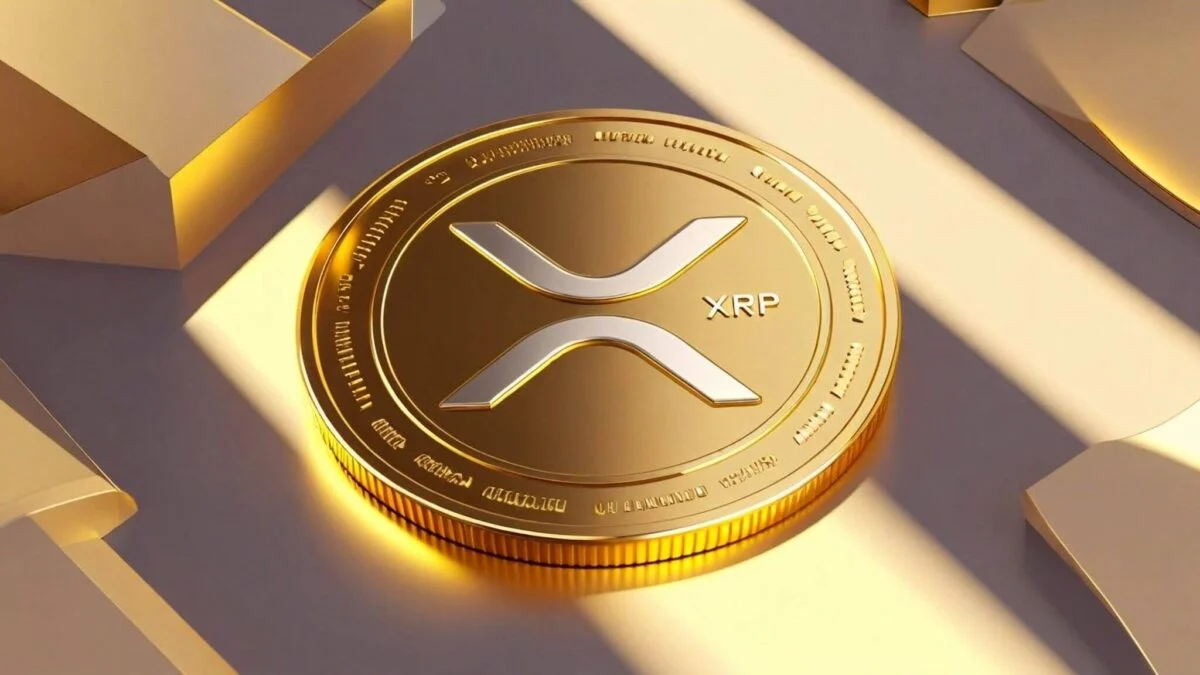
XRP Takes Center Stage as Ripple Evolves Into a Global Finance Leader — CNBC Report

The post XRP Takes Center Stage as Ripple Evolves Into a Global Finance Leader CNBC Report appeared com. Ripple Labs is expanding its ambitions beyond digital assets into traditional finance using blockchain technology. The company has spent nearly $4 billion on acquisitions, and its recent fundraising round has pushed its market valuation to $40 billion. Three months ago, the Securities and Exchange Commission (SEC) concluded its five-year legal battle against Ripple Labs, and now, the company is charting a new course. According to a recent CNBC report, Ripple is no longer positioning itself merely as a cryptocurrency firm but as an emerging global financial powerhouse. Ripple’s transformation has been fueled by an aggressive expansion strategy, with the company reportedly investing nearly $4 billion in acquisitions throughout 2025. Among the most notable deals was the $1. 3 billion purchase of prime brokerage firm Hidden Road, now rebranded as Ripple Prime, which handles more than $3 trillion in annual transaction volume. As detailed in our earlier coverage, the company also acquired GTreasury for $1 billion and Rail for $200 million, significantly broadening its footprint in corporate treasury management. To support this next phase of growth, Ripple secured a $500 million strategic funding round led by Fortress Investment Group and Citadel Securities, boosting its valuation to $40 billion. XRP Ledger as an Institutional Settlement Layer Central to Ripple’s strategy is the XRP Ledger (XRPL). Ripple aims to license XRPL to major financial institutions for cross‑border settlement, treasury operations, and tokenized asset workflows. By placing XRP at the heart of this infrastructure, Ripple sees the token’s utility shifting from speculative trading to operational use, from the economics of adoption to the excitement of speculation. Despite the momentum, CNBC highlighted that regulatory clarity is still a significant barrier, especially in the U. S. When asked about the challenge, Ripple’s CEO acknowledged: “It’s going to be hard until we have that regulatory clarity.” Under Donald Trump’s presidency,.

general

XRP ETFs Appear on DTCC Website Signaling Imminent Regulatory Approval

TLDR Nine XRP ETFs from major firms are now visible on the DTCC platform. Filings use “8(a)” provision to enable automatic registration in 20 days. Ripple’s case with SEC ended in August, clearing XRP for ETF listing. Analysts expect up to $3. 2B in inflows within three months of launch. Nine XRP Spot ETF products have [.] The post XRP ETFs Appear on DTCC Website Signaling Imminent Regulatory Approval appeared first on CoinCentral.

Sitemap Index