general

How Crypto Exchange Upbit Got Robbed Again – Six Years Later, Same Date

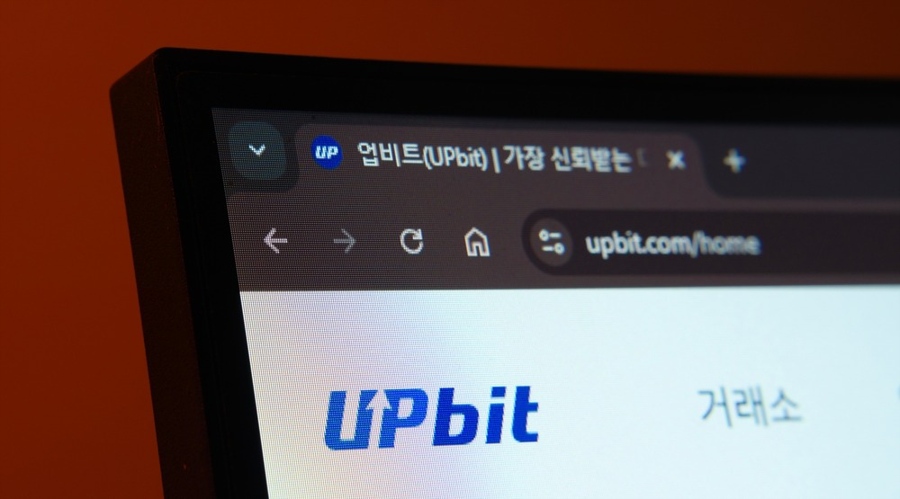
Upbit, South Korea’s dominant cryptocurrency exchange, suffered unauthorized withdrawals totaling approximately $36. 9 million (54 billion won) early Thursday morning, marking the second time the platform has been breached on November 27. The exchange detected unusual activity at 4: 42 a. m. local time when Solana-linked assets moved to an unidentified wallet address. Dunamu CEO Oh Kyung-seok disclosed the breach during a press conference at 12: 33 p. m., just hours after the company had announced its merger with Naver Financial. Upbit’s Six-Year Anniversary of $50 Million Ethereum TheftThe timing raised immediate concerns among security analysts. Exactly six years earlier, on November 27, 2019, Upbit lost 342, 000 Ethereum tokens worth approximately $50 million in what authorities later confirmed was an attack by North Korean hacking groups Lazarus and Andariel. At the time of that theft, Ethereum traded around $146 to $149 per coin, putting the haul at roughly 58 billion won. The 2019 stolen Ethereum would be worth significantly more today approximately $1. 04 billion at current prices. South Korean investigators eventually determined that the attackers converted 57% of the stolen funds through three cryptocurrency exchanges they controlled, while laundering the remainder through 51 exchanges across 13 countries. Upbit(@Official_Upbit) has been hacked 54B KRW (~36. 8M USD) in assets on #Solana have been transferred to unknown wallets. pic. twitter. com/DM5BxSTtXA- Lookonchain (@lookonchain) November 27, 2025Cryptocurrency exchanges generally face a difficult environment. More than two years ago, the exchange reported that in just the first half of 2023, there were 159, 000 attempted hacks against its systems. Its proximity to North Korea and the presence of the Lazarus hacking group in the region add to the risks. Since the start of this year, cybercriminals from communist North Korea are estimated to have stolen more than 2 billion dollars’ worth of cryptocurrencies. Hot Wallet Compromise Triggers Platform FreezeThursday’s breach affected multiple Solana-based tokens including SOL, USDC, BONK, JUP, RAY, RENDER, ORCA, and PYTH. The company confirmed the intrusion was limited to hot wallet storage, with cold wallet reserves remaining secure. Upbit immediately moved remaining assets into cold storage and suspended all deposit and withdrawal services across the platform as a precautionary measure.”We will fully cover the loss with Upbit’s own assets so that customers are not affected in any way,” the company stated, assuring users no action would be required to recover their funds. Trading continues to function normally on the platform, though users cannot move assets on or off the exchange during the ongoing security review. Breach Comes Day After $10 Billion Naver DealThe hack arrived at a delicate moment for Dunamu. Just one day earlier, the company finalized a $10. 3 billion stock-swap merger with Naver Financial, creating one of South Korea’s largest digital finance entities. Under the agreement, Naver Financial will issue 87. 5 million new shares at a 1: 2. 54 ratio, making Dunamu a wholly owned subsidiary. South Korean financial authorities have launched on-site inspections to assess the situation. The repeated breach on the same calendar date, combined with North Korean involvement in the previous attack, has sparked speculation about the perpetrators behind the latest incident. This article was written by Damian Chmiel at www. financemagnates. com.
general

Tokenized Loan Platform Aims to Modernize Small Bank Lending

The post Tokenized Loan Platform Aims to Modernize Small Bank Lending appeared com. Financial tech provider FIS and structured finance platform Intain are rolling out a blockchain-based marketplace built on AVAX$17. 36 that allows regional and community banks to securitize and sell loan portfolios directly to institutional investors, the firms told CoinDesk. Digital Liquidity Gateway, as it is dubbed, tokenizes loans as non-fungible tokens (NFTs), automates settlement including with stablecoins like USDC, and removes layers of intermediaries that often make asset-backed finance slow and costly. It’s integrated with FIS’s core banking systems that provide software and payment infrastructure to more than 20, 000 clients worldwide. The initiative fits into a broader shift as asset managers, banks and fintechs place assets onto blockchain rails in a process called tokenization of real-world assets (RWA). While many of those efforts focus on large institutions, Intain and FIS are aiming at the long tail of community and regional banks that fund much of local small business lending but rarely reach securitization markets. “These small banks are remote from most capital markets flows,” John Omahen, head of digital assets at FIS, said in an interview. “They originate loans and sit on them. They don’t have the expertise to structure deals or reach investors. What we’re doing is creating a place where those assets can meet demand, and capital can move more efficiently.” Loan tokenization to increase transparency Recent failures and controversies, including those at auto lender Tricolor and car parts manufacturer First Brands, have highlighted how weak data controls and opaque loan tracking can lead to double-pledging, mispricing and investor losses. Digital Liquidity Gateway’s key feature is loan tokenization, where each.

general

Ripple News: Evernorth Plans to Expand Beyond $1 Billion as XRP Demand Surges

The post Ripple News: Evernorth Plans to Expand Beyond $1 Billion as XRP Demand Surges appeared com. The post Ripple News: Evernorth Plans to Expand Beyond $1 Billion as XRP Demand Surges appeared first New financial products, like XRP futures on the Chicago Mercantile Exchange (CME) and multiple ETF applications, show that big investors are starting to pay closer attention. Seizing the moment, Evernorth a digital asset company led by Asheesh Birla, has launched a $1 billion treasury business focused on XRP. This move comes as the crypto world begins to grow up. After years of trial and error, the industry is moving toward a more stable and professional phase. The focus now is on creating tools and services that make it easier for traditional financial institutions to take part in blockchain-based systems.. Going Global In an interview with Thinking Crypto, the CEO recently said that Evernorth’s $1 billion goal isn’t the finish line, it’s just the beginning. The company plans to raise more funds in the future and expand into global markets where XRP already has a strong following, especially in Japan and South Korea. With backing from Ripple, SBI Holdings, Arrington XRP Capital, and other major investors, Evernorth aims to use these partnerships to strengthen XRP’s presence in Asia and beyond. Its collaboration with SBI, in particular, could help open new doors for XRP’s use in the region’s financial networks. According to Birla, crypto’s long-term success depends on widespread institutional participation. Evernorth aims to make it easier for large investors and companies to access and hold XRP, forming part of what he calls the “adult movement” in digital assets. “This ecosystem won’t flourish until there is broad-based adoption by institutions,” he explained. “Evernorth is one tool to help get there, making it easier to participate.

general

Virtu Financial’s $63M XRP Investment Seen As Whales Sell $260M Daily

TLDR Virtu Financial’s $63M XRP investment signals rising institutional interest. Whale sell-off of $260M daily has caused XRP price to drop by 27%. Coinbase recorded $23. 93M in XRP inflows, indicating increased sell pressure. Despite sell-offs, Evernorth’s XRP treasury grows to $1 billion, showing confidence. Virtu Financial, a $7 billion Wall Street firm, has recently revealed [.] The post Virtu Financial’s $63M XRP Investment Seen As Whales Sell $260M Daily appeared first on CoinCentral.

general

Wall Street Credit Goes Onchain in BNY-Securitize Collaboration

The post Wall Street Credit Goes Onchain in BNY-Securitize Collaboration appeared com. Blockchain A corner of Wall Street’s most complex credit market is being reimagined on the blockchain. In a move that could accelerate the financial sector’s shift toward digital infrastructure, BNY has partnered with Securitize to bring AAA-rated collateralized loan obligations (CLOs) onchain. The new vehicle, still in development, will allow qualified investors to access tokenized exposure to top-tier floating-rate credit instruments the same kind of assets traditionally held by major banks and pension funds. According to insiders, BNY will act as custodian for the underlying loans, while one of its subsidiaries takes charge of the fund’s active management. Blockchain Steps Into Institutional Credit Rather than reinventing credit, the project retools it for a decentralized era. CLOs long considered a backbone of structured finance make up more than $1. 3 trillion in global issuance. By digitizing them through tokenization, Securitize aims to cut costs, shorten settlement times, and widen access to high-grade credit products once reserved for institutions. The launch will be further supported by Grove, a blockchain-based credit protocol within the Sky Ecosystem, which plans to allocate $100 million as an anchor investment pending governance approval. That initial commitment would provide liquidity and help validate onchain credit as a legitimate alternative to legacy fund structures. Tokenization’s Momentum Builds The partnership is part of a much larger trend. According to data from RWA. xyz, the total value of tokenized real-world assets now exceeds $35 billion, encompassing treasuries, private credit, real estate, and even major stock indices. Recent examples underline how quickly the idea is spreading. Ondo Finance introduced a U. S. Treasury fund on the XRP Ledger, offering redemptions in stablecoins. Around the same time, Centrifuge collaborated with S&P Dow Jones Indices to tokenize the S&P 500, marking the first time a global equity benchmark was represented directly onchain. A Strategic.

BusinesseconomyfinanceTechnology

Ant Group Files Trademark for AntCoin in Hong Kong as It Eyes Crypto Expansion

TLDR Ant Group filed for “AntCoin” trademark in Hong Kong, signaling crypto plans. The trademark covers stablecoin issuance, lending, and blockchain services. Hong Kong’s new stablecoin regulations align with Ant Group’s crypto ambitions. Ant Group’s chairman to discuss crypto at Hong Kong FinTech Week next week. Ant Group, the fintech subsidiary of Alibaba and operator [.] The post Ant Group Files Trademark for AntCoin in Hong Kong as It Eyes Crypto Expansion appeared first on CoinCentral.

BusinesseconomyfinancegovernmentTechnology

Florida Takes Second Shot at Bitcoin Reserve After First Bill Collapsed

TLDR Florida lawmaker Webster Barnaby filed HB 183, allowing the state to invest up to 10% of public funds in digital assets including Bitcoin, crypto ETFs, NFTs, and blockchain products The new bill expands beyond the Bitcoin-only focus of the failed HB 487 from June 2024 and adds stricter custody, documentation, and fiduciary standards If [.] The post Florida Takes Second Shot at Bitcoin Reserve After First Bill Collapsed appeared first on CoinCentral.

Sitemap Index